RED, WHITE AND YOU: Kat Wilson Celebrates America’s 250th Birthday with a New #SELIFETHRONE

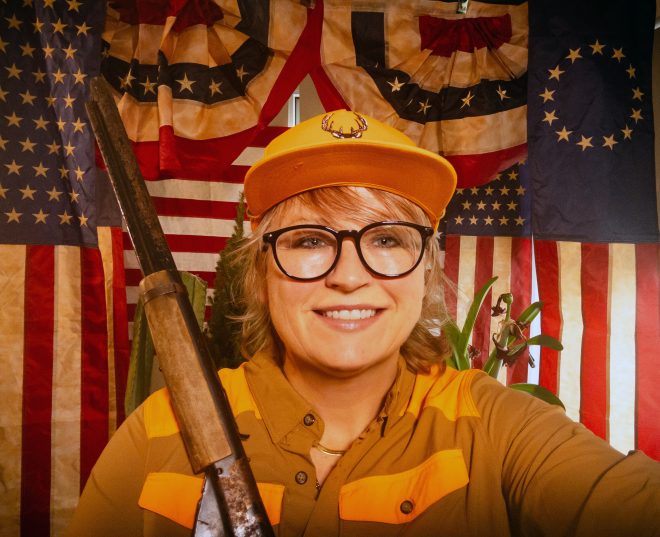
WORDS / KODY FORD PHOTOS / KAT WILSON
Depending on your cultural outlook, the advent of the iPhone was either the ultimate democratic tool or the death knell of the Republic. Almost overnight, high-def cameras in every pocket ushered in an era of unprecedented accountability, pulling the curtain back on world-changing events with a raw, visceral focus. Yet this same technological leap birthed the Influencer age: a digital landscape characterized by rampant materialism. As these competing impulses vied for our attention, an eventual numbness to the relentless stream of history crept in as we doomscroll until the friction wears on our thumbs.
When the Founding Fathers envisioned a nation built on lofty, abstract ideals of liberty and contradictory definitions of personal freedom, the notion of visually documenting history in real-time was a fantasy beyond their reach. The idea of today’s technology in their hands lends itself to the absurd: imagine Benjamin Franklin losing his fortune to OnlyFans models and Thomas Jefferson getting cancelled for a myriad of reasons. Thomas Payne’s King George memes would have been merciless.
One thing that America had in the 18th century that has eroded greatly today is a sense of community forged through real world interpersonal relationships. But on the eve of America’s 250th Birthday, artist and photographer Kat Wilson aims to bridge these worlds through her Participation Art, aka “Party Art”– a movement of community-driven public artworks where the artistic vision only comes to life by engaging a diverse group of people in an act of art. Putting participation at the center of her work changed the dynamic and direction of her career. The pinnacle of her Party Art has been the interactive installations known as #SelfieThrones.
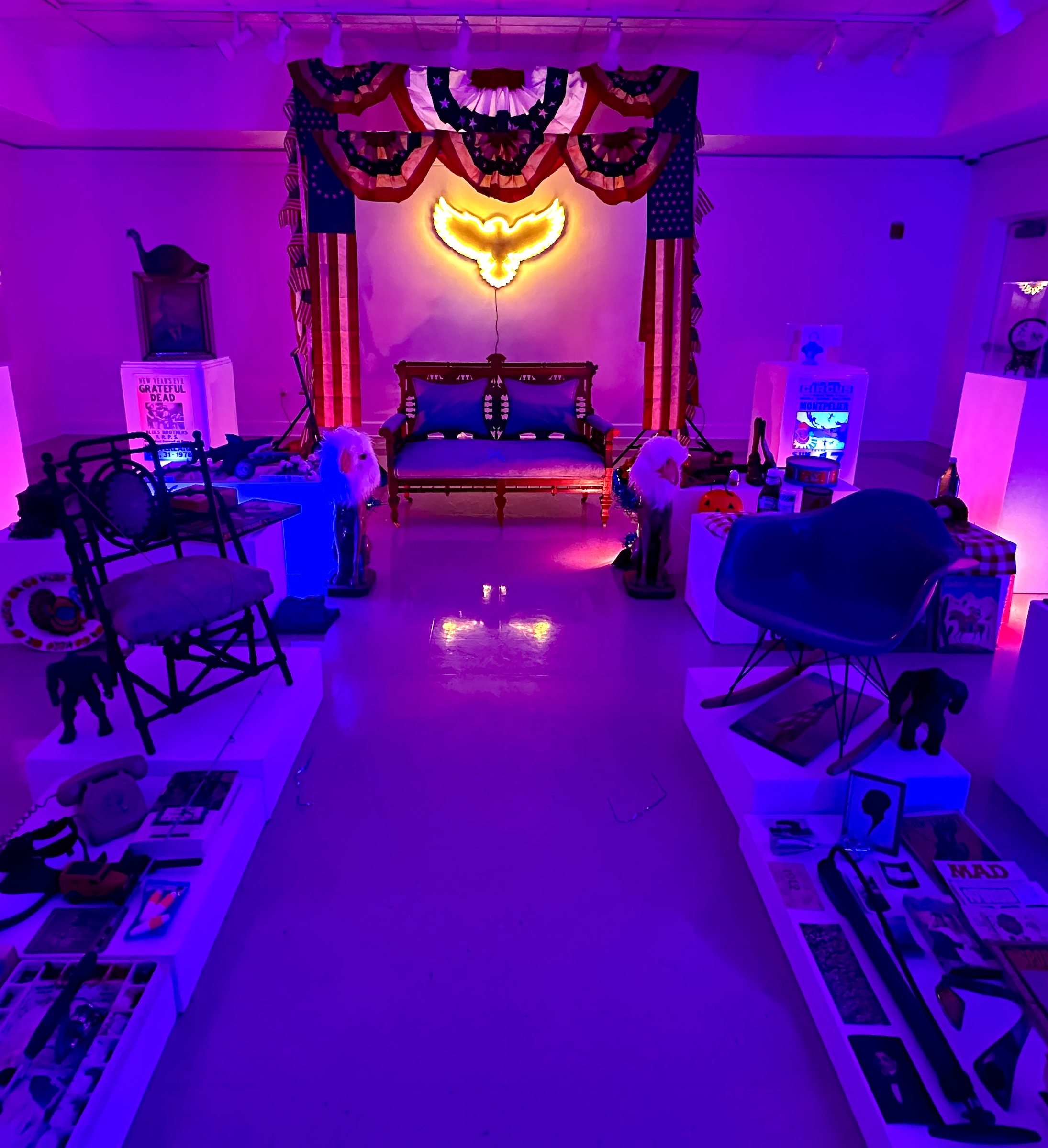 Launched in 2018, the #SelfieThrone is Wilson’s evolution of her popular Habitats portrait series. #SelfieThrones are a participatory collision of sculpture and performance that blurs the line between self-empowerment and social media obsession. Wilson constructs these monuments from a hodgepodge of neon, projection mapping, and salvaged objects, then performs her most radical act: she walks away, leaving the public to capture their own images. This redefinition of the portrait shifts the power to the participant. Wilson has created #SelfieThrones for pop-up art shows, her own studio and even the short-lived Format Music and Art festival in Bentonville, which featured her largest throne to date. Her latest, The United States of Selfies, is on display now in the Baum Gallery at the University of Central Arkansas in Conway in honor of the USA’s semiquincentennial.
Dr. Rachel Trusty, Director of the Baum Gallery at UCA, contacted Wilson shortly after taking over as curator to invite her for a show that would encourage engagement from students. Trusty said, “I thought it would really get the students excited and engaged in the gallery, and bring in people who hadn’t visited before—a kind of new opening for the space.”
During their early meetings, Wilson and Trusty brainstormed on ideas amidst the backdrop of university planning for America’s big celebration. Once Wilson confirmed her intent, Trusty gave her a prompt. She said, “I asked her if she would be willing to use the questions, ‘What does it mean to be an American?’, ‘What does it mean to be a citizen?’ as a foundation for her installation…that is how we arrived at this plan for THE UNITED STATES OF SELFIES. A #SELFIETHRONE for the People. A 250-Year American Portrait. I think it will be a fantastic opportunity…to reflect critically on where the US is now and what ‘being an American’ means.”
Having UCA’s backing allowed Wilson to think big for the piece. She said, “I couldn’t make this alone, but my role as the artist hasn’t changed. It’s still my shitty sketch and my concept. When you have a budget, you can hire the best, most reliable people, show them that shitty sketch and half-baked concept, and then get out of the way.”
To construct this, Wilson enlisted longtime collaborator Maxey Neon and art appraiser Jennifer Carman to turn that concept into an actual definition that was clear, but still ready to party. “Once the idea was born to mark 250 years with 250 objects, we both knew I was the person that would make the objects appear,” Carman said. “I said to Kat, ‘We gave the world Abstract Expressionism and cheeseburgers and the blues!,’ and then it was on. Ultimately, I’m just one more collaborator. The only difference is that the other guy is bending neon and I’m on eBay buying a vintage “Viagra Nation” pharmaceutical pin and a 19th century hand-enameled bust of George Washington.”
Carman has selected items associated with American people, places, products, activities, and historic events, seeking to gather items that evoke a real zing of nostalgia and joy, while also inviting reflection and honesty. “It’s the glory of our pop culture mixed with the heartbreaks we’ve endured,” she said. “Our country isn’t a utopia of snow cones and shimmying flappers and biscuits and Model Ts and rock and roll. Our first 250 years have also been marked by wars, pandemics, greed, national tragedies, and a multitude of profound moral failures. I’ve chosen a handful of objects that acknowledge difficult moments in our history, but I aim to remain true to the upbeat spirit of #SelfieThrone”…This throne will be a love letter to America’s beauty and pop culture and innovation and sorrows, but most of all, it will be really fun.”
The United States of Selfies is a collective portrait of America that took 250 years to take.
“This #SelfieThrone doesn’t tell you what America is,” Wilson said. “It says you need to come love yourself and add yourself to this picture we’ve been making for 250 years. You’re invited. And as you walk past 250 objects from 250 years of America to take your American throne, you might feel a rush of patriotism, like the first time you watched Hamilton on Netflix during a pandemic. Or you might start thinking about the parts of this story that aren’t easy to look at and wonder if you even want to belong. Either way, just remember you’re making Benjamin Franklin very uncomfortable.”

Previous Story
WINTER LUMENLAND: Hot Springs’ Garvan Woodland Gardens lights up the holiday season
Next Story
Arkansas Women to Watch 2026: Words Become Matter Exhibition Examines Books as Objects, Structures, and Experience


Comments