Corbin Pitts Waits for No One: How a young filmmaker made his debut feature on his own terms

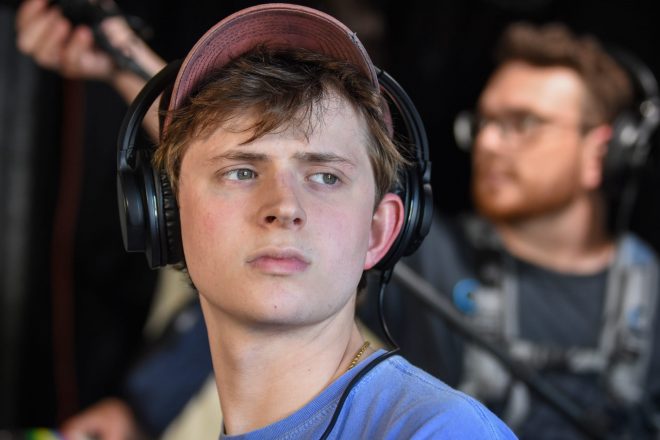
Arkansas filmmaker Corbin Pitts has never waited for permission. From launching his own production company at age eleven to spending his senior year of high school knocking on doors to fund his first feature, Pitts has made Good Time Charley the hard way and entirely on his own terms.
Now, with the world premiere set for December 17th at CALS Ron Robinson Theatre, Pitts returns home with a film shaped by youth, anxiety, and the cultural noise of a generation coming of age in turbulent times. The Idle Class caught up with Pitts for a chat that finds him reflecting on turning teenage unease into cinema, the risks of making a feature before graduation, and what it means to debut a deeply personal film for an Arkansas audience.
What inspired you to make this film? Was there a particular moment or idea that sparked it?
There wasn’t a single lightning-bolt moment that sparked Good Time Charley. The story revealed itself as I wrote it. I was 17 at the time — juggling school, college applications, and raising money for a movie I wasn’t sure anyone would take seriously.
If I had to name one core inspiration, it’d probably be the growing cultural comfort with cruelty — especially online. The way people pile on, say the worst things imaginable, and justify it because it’s happening at scale. There’s something eerie and surreal about that kind of collective behavior. It became the emotional undercurrent of the film — people doing things they know are wrong but convincing themselves it’s normal because everyone else is doing it too.
What was your role beyond directing (e.g., writer, producer)? How did wearing multiple hats shape the experience?
It was the ultimate crash course — my own personal film school. I wore just about every hat: executive producer, writer, director, DP, editor, colorist, and sound designer. It was by far the most intense creative undertaking I’ve ever attempted. I was working 18-hour days for weeks straight, completely immersed. That level of commitment — exhaustion, obsession, all of it — made me deeply connected to the film on an emotional level. There wasn’t a single frame I didn’t sweat over.
What was the biggest challenge you faced during production and how did you overcome it?
One of the biggest challenges was managing the tight schedule while working with the union and learning how to cash flow a film in real time. Scheduling a union production is like solving a massive, unforgiving puzzle-everything has to click, or it falls apart fast. There’s no room for guesswork.
How did I overcome it? Honestly, I just figured it out. Trial by error. There’s no cheat code, just persistence and not letting the pressure break you.
What surprised you the most about directing a film for the first time?
By the time I directed Good Time Charley, I had already made several short films, music videos, documentaries, and a few featurettes. But I had never worked with a full crew before — and that was the biggest adjustment. Suddenly, it wasn’t just me doing everything. I had to learn how to communicate my vision clearly and artistically to other people, to delegate, trust, and articulate in a way that brought everyone into the same creative headspace. It was a leap, but it pushed me to grow fast.
Did anything go completely differently than you expected for better or worse?
Every day brought something completely unexpected–usually for the better, because I made it that way. Curveballs come constantly in filmmaking, but that’s the job: you’re there to solve problems. You can either let them derail the project or use them to push it somewhere new and stronger. It’s a choice — and I chose to make the chaos work for me.
What was the most rewarding part of the process? Any specific moments on set, in post, or even at a screening?
Honestly, I’ve been so close to this project for so many years that it’s hard to step back and feel rewarded in the traditional sense. But what has meant the most so far is seeing how people respond to it–how genuinely moved some audiences have been.
The goal of Good Time Charley was never to lecture, but to hold up a mirror–to spark dialogue around certain issues we’re facing right now, especially in America. When people tell me the film made them reflect or start a conversation they hadn’t had before, that’s when it feels worth it. That’s been the most rewarding part by far.
How did you find and work with your cast and crew? Any lessons on collaborating?
I found almost everyone through personal experience–either from past sets I’d directed or from referrals. But the majority of the crew came from relationships I built over the last 15 years working as an actor. A lot of the cast has been heavily involved in the Arkansas film/theater scene. They were people I had either worked with or wanted to work with. You learn quickly who shows up, who cares, and who you’d want in the trenches with you.
When it comes to collaboration, the biggest lesson is simple: listen. Be open. But also know when to stand firm. The balance between trusting your team and trusting your gut is everything.
What was your approach to visual style or tone? Did that evolve during production?
My approach to the visual style was rooted in restraint and elegance. I wanted Good Time Charley to feel visually beautiful without ever letting the camera overpower the story. The goal was to keep things classy–grounded, intentional, and never too flashy or modern for the sake of it.
A major inspiration for me was Paul Thomas Anderson’s Magnolia–both in terms of tone and visual language. We shot on Atlas Orion anamorphic lenses, which gave us a wide, cinematic scope with subtle edge distortion. That morphing added a sense of emotional distortion without drawing too much attention to itself.
The camera work was designed to feel composed and deliberate. No gimmicks–just strong, expressive framing that respected the characters and gave the performances room to breathe.
And it slightly evolved during production. I had a clear sense of what I wanted and shot lists, so we stuck to that mostly.
If you could go back and give yourself one piece of advice before you started this project, what would it be?
The biggest lesson I learned was to trust my gut and not let the noise get in the way of the work. On set, you’ve got 30 or 40 people moving around, and it’s easy to get caught up wondering if they trust you or believe in your vision. But honestly, at the end of the day, that’s not the point.
Of course, you want your crew’s trust — it makes everything smoother. But I’m there to get the job done, not to spend the whole day feeling insecure about whether they believe in me. I know what I want, and I have to stay focused on that.
How has this experience shaped your vision for future work? What’s next for you?
This experience has really sharpened my vision and approach for future projects. I now have firsthand knowledge of what it takes to run a union production—from understanding agreements and contracts to managing cash flow, scheduling, and navigating unexpected hurdles. While I had a general idea before, this was a front-row education that gave me a complete picture of how every department works together.
It’s also boosted my confidence in what I’m capable of, even when the odds feel stacked against me. Knowing I can handle the complexities of a full production makes me ready to take on bigger challenges and push my directing further.
https://www.corbinpitts.com/
https://www.instagram.com/corbinpitts/
https://www.youtube.com/channel/UCxvFdqLQDHH1SCPIwreUzOQ
https://www.instagram.com/heroeprod

Previous Story
The Misfit Maker Market Closes Out Year with Winter Market
Next Story
WINTER LUMENLAND: Hot Springs’ Garvan Woodland Gardens lights up the holiday season


Comments