“Controlled Demo”: An Interview With Sam King
Fayetteville-based artist and musician Sam King sheds light on his upcoming art show, “Controlled Demo.”

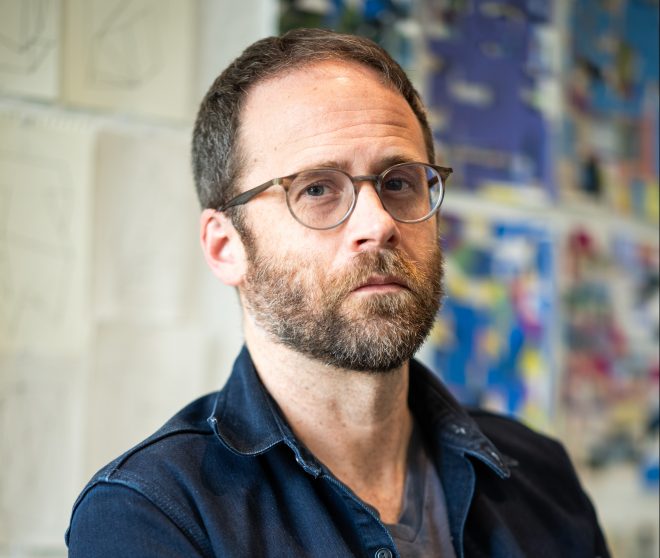
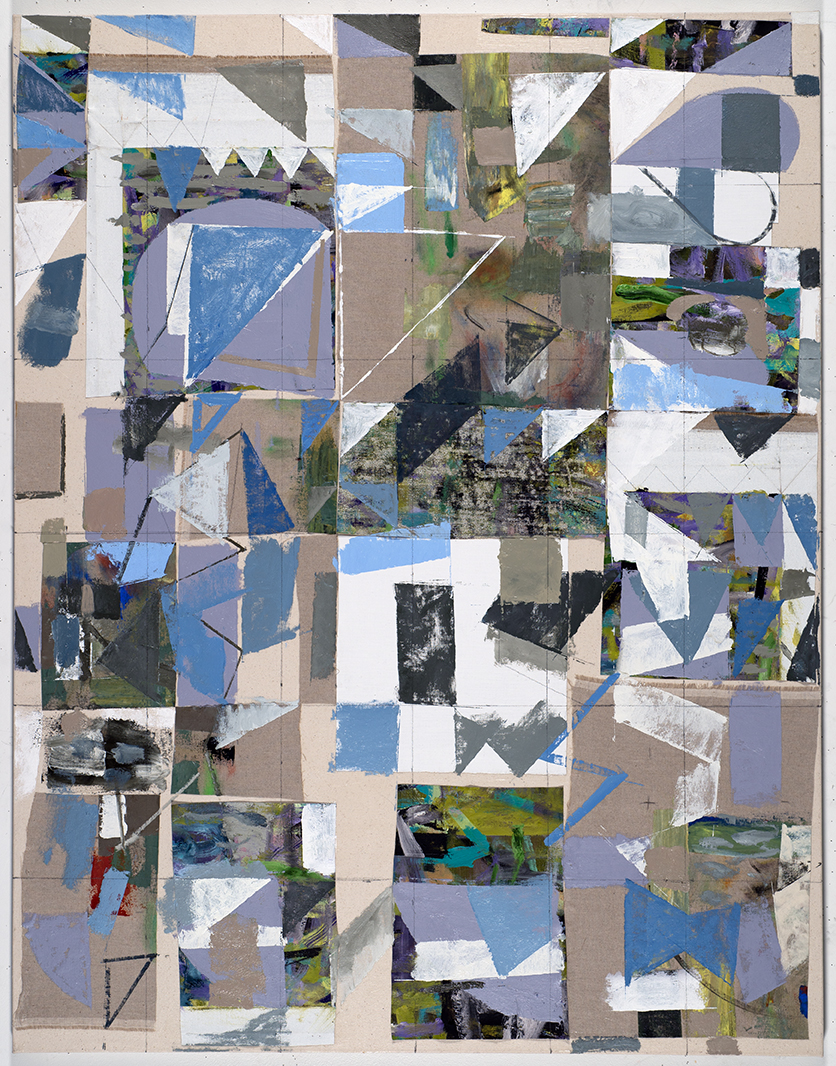
Fayetteville-based artist and musician Sam King is bringing “Controlled Demo,” an exhibition of abstract paintings, to The Creamery in Rogers this month. The exhibition is King’s interpretation of the overlap between historical preservation and modern construction patterns.
King’s exhibit will open with a reception on October 19th from 2:00 – 5:00 p.m. General visiting hours for the exhibit will be hosted on Oct. 17th, Oct. 18th, Oct. 24th and Oct. 25th from 1:00 – 5:00 p.m. The exhibition is presented in cooperation with MIXD Gallery of Rogers. The Creamery is an art and music space based in the Rogers Milk Plant building.
King serves as an associate director of the School of Art at the University of Arkansas. His art has been exhibited in private and public spaces across the country, most recently at The Painting Center in New York City.
Check out The Idle Class’ interview with King below for more insights into the show.
 Can you explain the title for this show, Controlled Demo?
I intend a double meaning with the title. In the construction industry, it means the deliberate and strategic demolition of a building. I also mean for it to reflect something more internal or personal: the desire to change your mind, or break a habit, for example.
Why did you feel that abstract paintings were the best artistic medium for this show?
This is how I’ve painted for many years. That’s not to say the work hasn’t evolved in that time. For me, it’s about finding narratives that support or enhance the work—not the other way around.
How long have you been working on putting this show together?
The paintings were all finished this year. It’s tricky to say when they started, because I have an auto-recycling studio process. I cut up old work, recombine it on new canvases, and then paint more. Some parts of these paintings are a decade old. I wasn’t working on those parts continuously over all that time, though.
Why did Rogers feel like the best place to house this collection?
It’s The Creamery, specifically (the historic Rogers Milk Plant Building). This space complements the paintings more actively than standard white walls tend to. When I am in a space like this, I tend to think about changes in need, use, and value as time passes. I also know it as a performance space for experimental music, and it reminds me of the one I co-ran in Fayetteville (Lalaland, 2011-2019).
What message are you hoping that visitors take from the show? Your exhibition statement mentions the development of Highway 112 and the discovery (and eventual dismantling) of a group of buildings estimated to be between 6,000 and 9,000 years old.
I don’t like to be too prescriptive in how people interpret my work, but I did include that bit of recent local news as a kind of matrix for engaging with these paintings. In addition to the discovery and discarding of a historic site (other than some collected artifacts), the highway expansion impacts people’s lives and livelihoods. This is a concrete expression of values and priorities, but whose are they?
Other interpretations are available, as well. I think it’s possible to communicate powerful things with abstraction, but the power resides most with the viewer.

Previous Story
Hill Bombing: The Skating Movement Nouveau of Northwest Arkansas
Next Story
REVIEW: Japanese Breakfast with SPELLLING at The Momentary - 10.5.2025


Comments